Apron Sink Vs Farmhouse Sink – What’s The Difference?
If you’re planning a kitchen remodel and debating between an apron sink and a farmhouse sink, you’re definitely not alone.
The truth is, the difference between the two often comes down to terminology and marketing. “Farmhouse sink” is a popular, traditional term, but not every home features farmhouse-style decor. That’s where the term “apron sink” comes in—it feels more modern and versatile, making it appealing to a wider range of kitchen styles.
Both apron and farmhouse sinks are known for their generous size and deep basins, making them highly practical for everyday use. However, there are a few subtle distinctions worth noting.
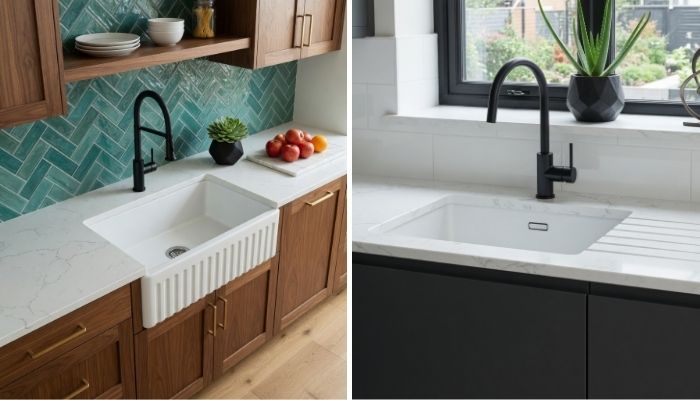
Apron sinks are defined by their exposed front panel, which extends slightly beyond the edge of the cabinetry. This creates a bold, statement look and can add a modern or transitional touch to your kitchen.
Farmhouse sinks, on the other hand, are often associated with a more classic, rustic design. While many also feature an exposed front, some versions are installed in a way that blends more seamlessly with the surrounding cabinetry, giving a softer, integrated appearance.
In the end, both options offer similar functionality—the choice really comes down to the look you want to achieve and how it fits with your overall kitchen design.
What Is A Farmhouse Sink?
Farmhouse sinks have a long history and were traditionally made from heavy materials like cast iron or fireclay. They were commonly used in old farmhouses, which is how they got their name.
Today, modern farmhouse sinks come in a wide range of materials, including ceramic, concrete, granite, copper, and stainless steel.
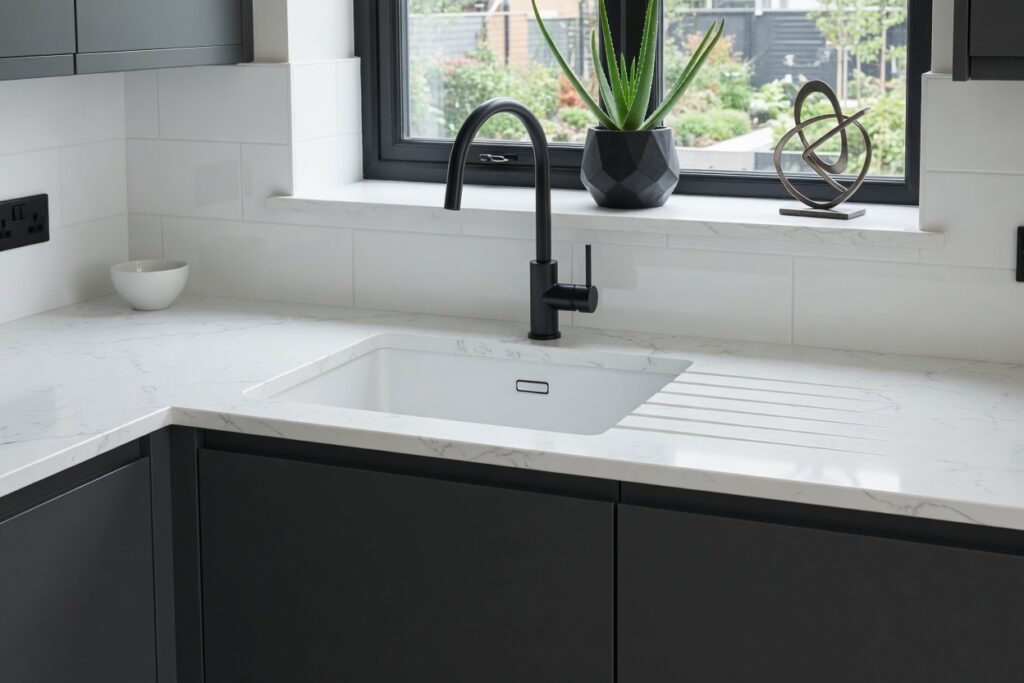
Key features include a large, deep basin with softly rounded corners, making it easy to clean oversized pots and pans. Most designs have a single basin, though double-basin options are also available. Unlike apron sinks, traditional farmhouse sinks typically do not have an exposed front, as they are covered by the surrounding countertop or cabinetry.
Farmhouse Sink Pros
Farmhouse sinks are a great choice if you need plenty of space for cooking or entertaining. Their large, deep design easily handles big pots, pans, and heavy dish loads.
They’re also highly durable and built to last, often adding long-term value to your home. Cleaning is simple thanks to their spacious basin and smooth surfaces.
Another major advantage is their versatility in style. Farmhouse sinks come in a wide range of materials, colors, and sizes, making them suitable for many kitchen designs—not just rustic spaces. You can also choose between single or double basin options depending on your needs.
Farmhouse Sink Cons
Despite their benefits, farmhouse sinks aren’t ideal for every kitchen. Their large size can overwhelm smaller spaces and may require significant adjustments during installation.
They also tend to be more expensive than standard sinks, both in terms of the unit itself and installation costs. In some cases, countertops may need to be modified or replaced to fit the sink properly.
Additionally, finding perfectly fitting accessories can be more challenging compared to standard sink styles, which may limit customization.
What Is An Apron Sink?
An apron sink is a wide, deep sink named for its exposed front panel, or “apron,” which extends slightly beyond the cabinet edge. This visible front adds a stylish focal point and can instantly elevate the overall look of your kitchen.
The term “apron sink” also appeals to homeowners who want a large, functional sink without committing to a full farmhouse-style design.
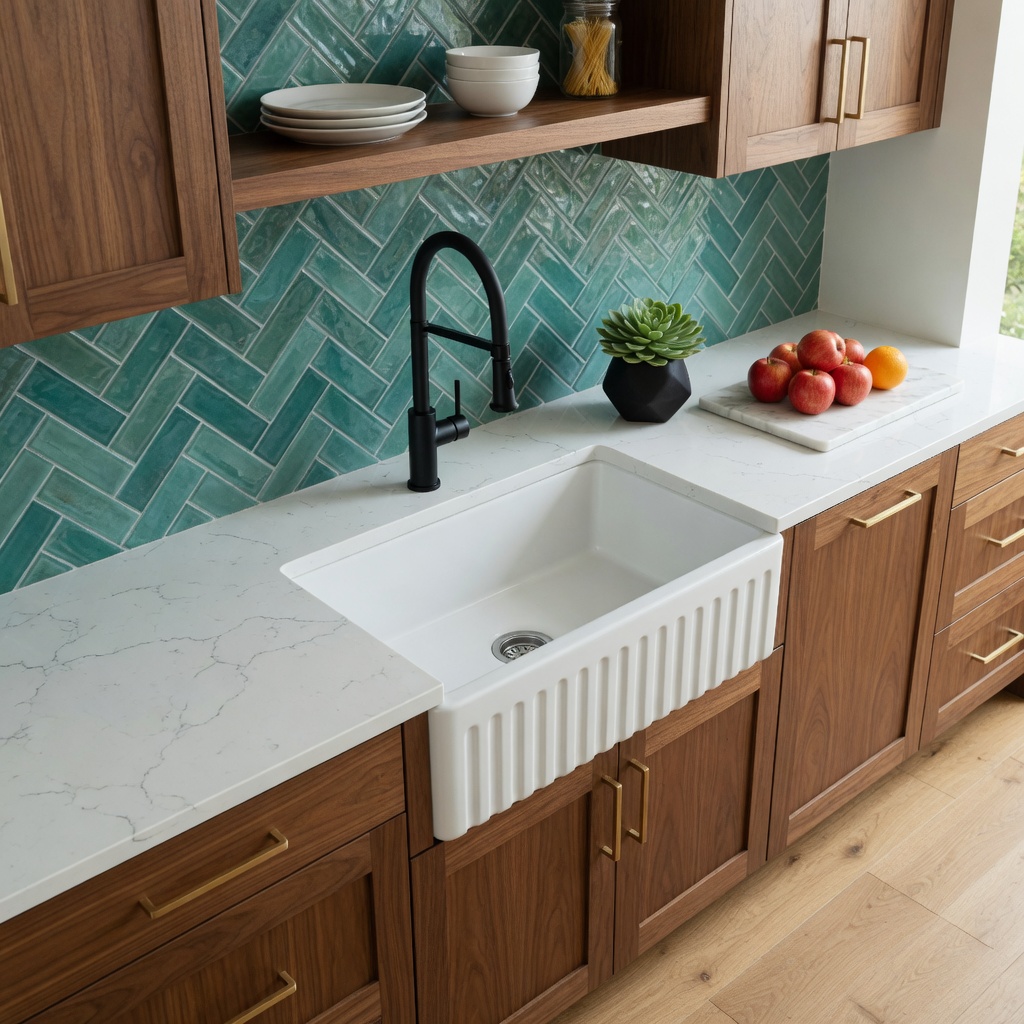
Key features of an apron sink include a spacious, deep basin and a distinctive exposed front. These sinks are available in a variety of materials, colors, and styles, making them easy to match with different kitchen aesthetics.
Apron sinks are highly versatile—they can be installed as a standalone statement piece or incorporated into a farmhouse-style setup. Overall, they offer a more modern and flexible take on the traditional farmhouse sink.
Apron Sink Pros
Apron sinks are designed with comfort in mind, making them especially practical for shorter users since you don’t have to lean forward as much. Their ergonomic design, combined with a large and deep basin, makes everyday tasks like washing oversized pots, baking sheets, and woks much easier.
They’re also durable and available in a wide range of materials, giving you plenty of style options. You can choose between single or double basin designs based on your needs. Another bonus is that the forward-facing design can help reduce water splashing onto cabinets.
Apron Sink Cons
The exposed front panel, while stylish, isn’t for everyone and may not suit all kitchen aesthetics. Finding accessories that fit perfectly can also be a bit challenging compared to standard sinks.
Installation is often more complex and usually requires professional help, which adds to the overall cost. Taller users may find the design slightly less comfortable over time. Additionally, you might need to modify or replace countertops to fit the sink, and overall, apron sinks tend to be more expensive than traditional options.
Apron Sink Vs Farmhouse Sink – Differences
If you’re choosing between an apron sink and a farmhouse sink for your kitchen remodel, it helps to understand how they differ in design, style, and practicality.
At a basic level, farmhouse sinks are traditionally made from materials like porcelain or fireclay, while apron sinks are available in more modern materials and finishes. The biggest visual difference is the front—apron sinks feature an exposed front panel, while farmhouse sinks are often more integrated into the cabinetry.
Design
Both sink types are large and deep, ideal for heavy kitchen use. The key difference is that apron sinks have a visible front that extends slightly beyond the cabinets, creating a bold focal point.
Farmhouse sinks, on the other hand, are usually more seamless in appearance. Their front is often covered or blended with surrounding cabinetry and can be installed under or flush with the countertop.
Style
Apron sinks offer more variety in terms of materials, colors, and finishes, making them a great fit for modern or transitional kitchens.
Farmhouse sinks tend to lean more traditional, often seen in classic white designs that suit rustic or country-style spaces.
Cost
Apron sinks are generally more expensive than standard sinks due to their design and installation needs.
Farmhouse sinks can be slightly more affordable, though still pricier than basic sink options.
Daily Use
In terms of functionality, both sinks perform similarly. Their deep basins make washing large pots, pans, and dishes much easier. The choice here mostly comes down to design preference rather than performance.
Material
For a classic farmhouse feel, materials like cast iron or fireclay are the go-to options.
If you prefer a modern look, apron sinks offer more variety, including stainless steel, copper, ceramic, and even matte finishes.
Installation
Installation is an important factor. Apron sinks can be challenging to install and often require professional help. In many cases, countertops or cabinetry need to be modified.
Farmhouse sinks are generally easier to install, though they may still require some adjustments. Common installation styles include top mount, flush mount, and undermount.
Appearance
Farmhouse sinks bring a timeless, traditional look that many homeowners love.
Apron sinks, with their exposed front and wide range of styles, offer a more customizable and modern aesthetic.
Faucet Compatibility
No matter which sink you choose, don’t forget about the faucet. Make sure it’s compatible in terms of height, reach, and installation style to work well with your new sink setup.
Final Thoughts
Both apron and farmhouse sinks are excellent choices for a functional and stylish kitchen. The right option depends on your design preferences, budget, and how much effort you’re willing to put into installation.