How to Clean a Bamboo Dish Drying Rack and Keep Mold Away

I was looking for a dish drying rack that would match my farmhouse kitchen style when I came across a beautiful bamboo dish drying rack. I loved its natural look and simple design. It also adds a warm, cozy touch to the kitchen. Bamboo dish racks are a great choice for anyone who wants a stylish and practical kitchen accessory that fits well with farmhouse decor.
While reading reviews on Amazon, I noticed that some people had problems with mold growing on their bamboo dish drying racks. This made me wonder if there was a simple way to keep them clean and prevent mold.
Can a bamboo dish drying rack stay clean and mold-free for a long time? The good news is that proper cleaning and daily care can help. Let’s look at some easy ways to clean a bamboo dish rack, prevent mold, and keep it in good condition.
I believe the best way to care for a bamboo dish drying rack is to start as soon as you take it out of the box. You don’t need to wait until mold appears to take action. A few simple steps can help protect the bamboo from moisture and keep it clean. With proper care from the beginning, you can help your dish rack last longer and keep your kitchen looking fresh.
Why Do Bamboo Dish Drying Racks Get Moldy?
Bamboo dish drying racks are made from natural materials. Unlike stainless steel or plastic racks, bamboo can absorb water, especially if it does not have a protective finish.
When you place wet dishes on the rack, water can collect between the joints, underneath the rack, and in small corners. If these areas stay wet for too long, mold and mildew can start to grow.
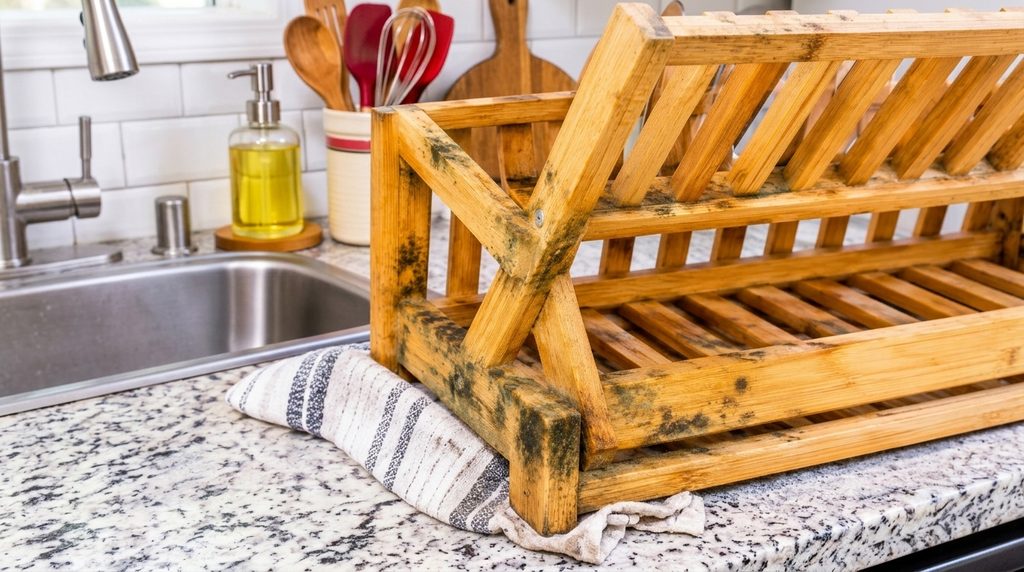
Here are some common reasons why bamboo dish racks develop mold:
- Poor airflow around the dish rack.
- Water collecting underneath the rack.
- Using a wet dish drying mat for too long.
- Leaving wet dishes on the rack for several hours.
- Not allowing the bamboo to dry completely between uses.
- Placing the rack too close to a stove or other sources of steam.
- Not cleaning the bamboo rack regularly.
The good news is that you can reduce the risk of mold with a few simple cleaning and care habits. Regular maintenance, proper airflow, and keeping the bamboo dry can help your dish drying rack stay clean and last longer.
How to Prevent Mold on a Bamboo Dish Drying Rack
1. Choose a Bamboo Dish Rack With a Protective Finish
When I purchased my bamboo dish drying rack, I chose a black one. I liked its simple look, but I also thought a protective finish might help keep moisture from soaking into the bamboo.
A bamboo dish rack with a proper protective coating may absorb less water than untreated bamboo. This can help reduce the risk of mold growth. However, keep in mind that a painted or coated rack is not completely waterproof.
Before buying one, look for a moisture-resistant finish that is safe for kitchen use. Also, check the product details and follow the manufacturer’s cleaning and care instructions. This small step can help you choose a dish rack that is easier to maintain.
2. Protect Your Bamboo Dish Rack With Food-Grade Mineral Oil
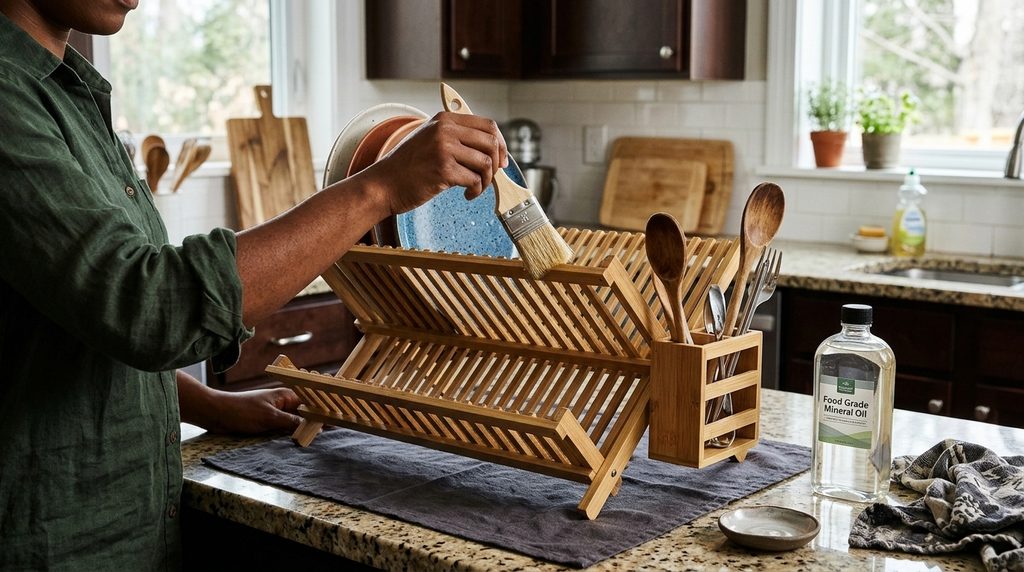
Another way to care for an unfinished bamboo dish drying rack is to use food-grade mineral oil. It helps condition the bamboo and can reduce how much moisture it absorbs. It also helps prevent the bamboo from becoming too dry or developing small cracks over time.
Here is how to apply mineral oil to your bamboo dish rack:
- Make sure the dish rack is clean and completely dry.
- Pour a little food-grade mineral oil onto a clean, soft cloth.
- Rub a thin layer of oil over the exposed bamboo surfaces.
- Use a clean, preferably new paintbrush to reach small corners, joints, and hard-to-reach areas.
- Let the oil soak in according to the product instructions.
- Wipe away any extra oil with a clean cloth before using the rack.
You can repeat this process every few months if the manufacturer recommends it. Regular care can help keep unfinished bamboo in good condition.
Note: If your bamboo dish rack has paint, varnish, or a protective coating, check the manufacturer’s instructions before applying mineral oil. Oil is generally more suitable for unfinished bamboo. Also, avoid using regular cooking oils because they can become rancid and cause unpleasant smells.
3. Keep Your Dish Drying Mat Clean and Dry
A dish drying mat helps protect your kitchen countertop from water. However, if it stays wet for too long, moisture can build up underneath your bamboo dish rack. This can increase the risk of mold growth.
After washing the dishes, check under the mat for any trapped water. Don’t let moisture sit between the mat and the countertop for long periods.
Before going to bed, lift the drying mat, wipe the countertop with a clean cloth, and hang the mat somewhere it can dry completely. You can also keep two dish drying mats in your kitchen. This way, you can use one while the other dries.
If your bamboo dish rack has a drip tray, remember to empty it regularly and wipe away any leftover water. These simple habits can help keep your kitchen counter and dish rack clean and dry.
4. Avoid Using Your Dish Drying Rack for Dish Storage
It may seem convenient to leave your plates, cups, and bowls on the dish drying rack after washing them. However, it is better to put them away once they are completely dry.
Leaving dishes on the rack all day can prevent proper airflow and make it harder for moisture to escape from the bamboo slats. Removing your dishes gives the rack more space to air-dry between uses.
Once your dishes are dry, place them in your kitchen cabinets. Remember, a dish drying rack is mainly designed to dry dishes, not to store them permanently. This simple habit can help keep your bamboo rack dry and reduce the risk of mold growth.
5. Wipe Your Bamboo Dish Rack After Each Use
One of the easiest ways to prevent mold on a bamboo dish drying rack is to keep it as dry as possible. A little daily care can make a big difference.
After removing your dishes, take a clean, dry, absorbent cloth and wipe away any leftover water. Make sure you clean the bottom of the rack, the joints, and the areas where plates and cups sit.
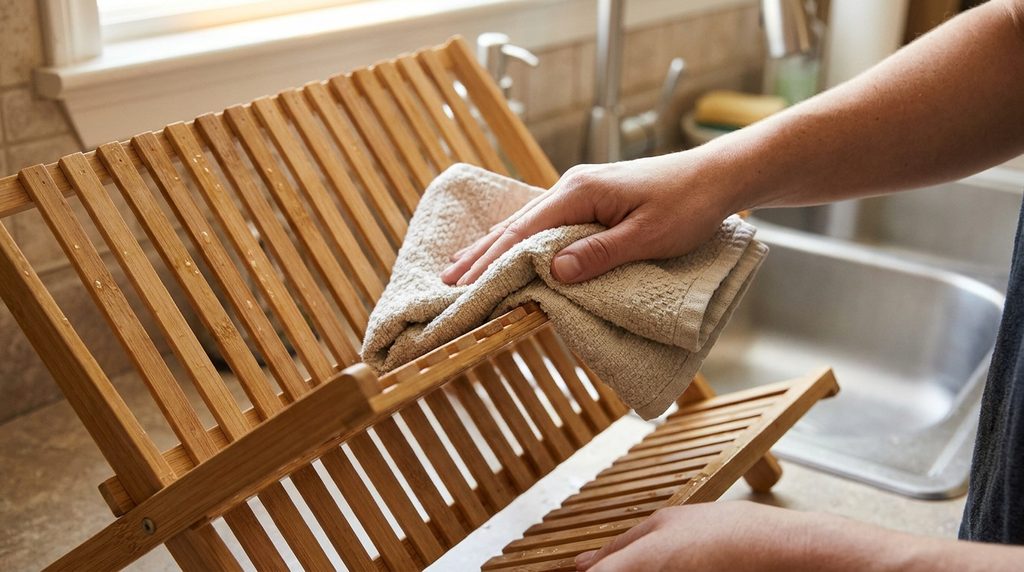
This simple task only takes a minute or two. Making it part of your daily kitchen cleaning routine can help prevent moisture buildup, reduce the risk of mold, and keep your bamboo dish rack in good condition for longer.
6. Allow Enough Air to Circulate Between Your Dishes
Try not to overcrowd your bamboo dish drying rack with plates, bowls, pots, and cups. When dishes are placed too close together, air cannot move freely, making it harder for everything to dry properly.
Leave a little space between each dish so air can circulate around them. This helps your dishes dry faster and reduces moisture buildup on the bamboo rack.
Also, keep your dish drying rack away from kettles, stoves, and other appliances that produce steam. Less moisture and better airflow can help keep your bamboo rack dry and reduce the chances of mold growth.
7. Clean Your Bamboo Dish Rack With White Vinegar
White vinegar is a common household cleaning product that can help remove unpleasant smells and light water stains from your bamboo dish drying rack. However, make sure it is safe for your rack’s finish before using it.
What You Will Need:
- ½ cup white vinegar
- ½ cup water
- A spray bottle
- A clean microfiber cloth
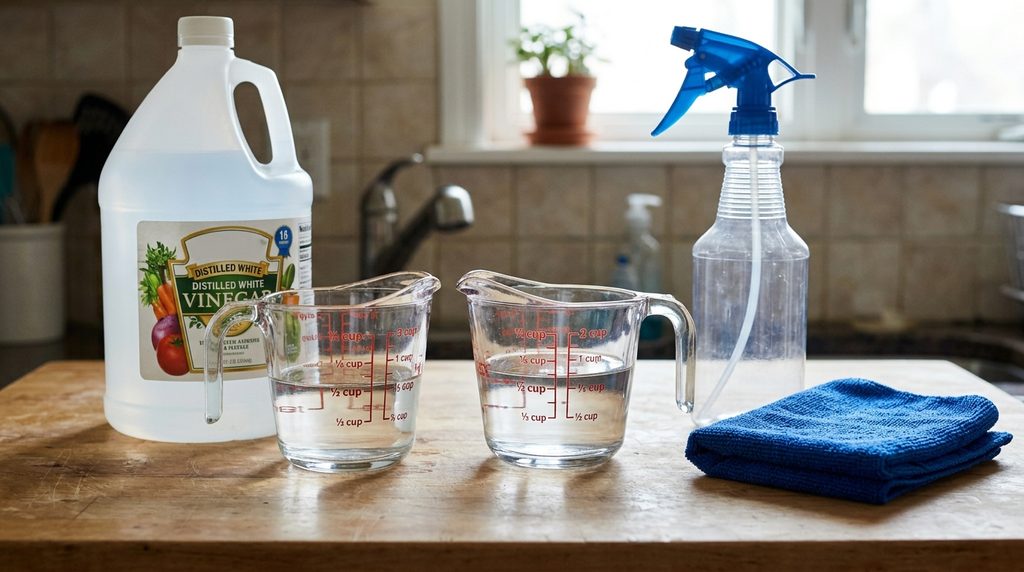
How to Clean It:
- Mix the white vinegar and water in a spray bottle.
- Lightly spray the mixture onto a clean microfiber cloth.
- Gently wipe the bamboo surfaces to remove dirt and water marks.
- Use another clean, damp cloth to wipe away any leftover vinegar.
- Dry the rack with a clean towel.
- Allow it to air-dry completely before using it again.
You can clean your dish rack this way once a week if the manufacturer allows vinegar cleaning.
Important Tip: Avoid soaking the bamboo or letting vinegar collect between the joints. Also, remember that vinegar is not a reliable way to remove mold that has grown deep inside bamboo. If you notice mold returning or spreading, consider replacing the affected rack.
8. Give Your Bamboo Dish Rack Some Fresh Air
Every now and then, take your bamboo dish drying rack outside and place it in a dry, shaded area with good airflow. Fresh air can help remove leftover moisture from the joints, corners, and other hard-to-reach areas.
Avoid leaving the rack in strong, direct sunlight for too long. Too much sun exposure may cause the bamboo to dry out, crack, or lose its natural color.
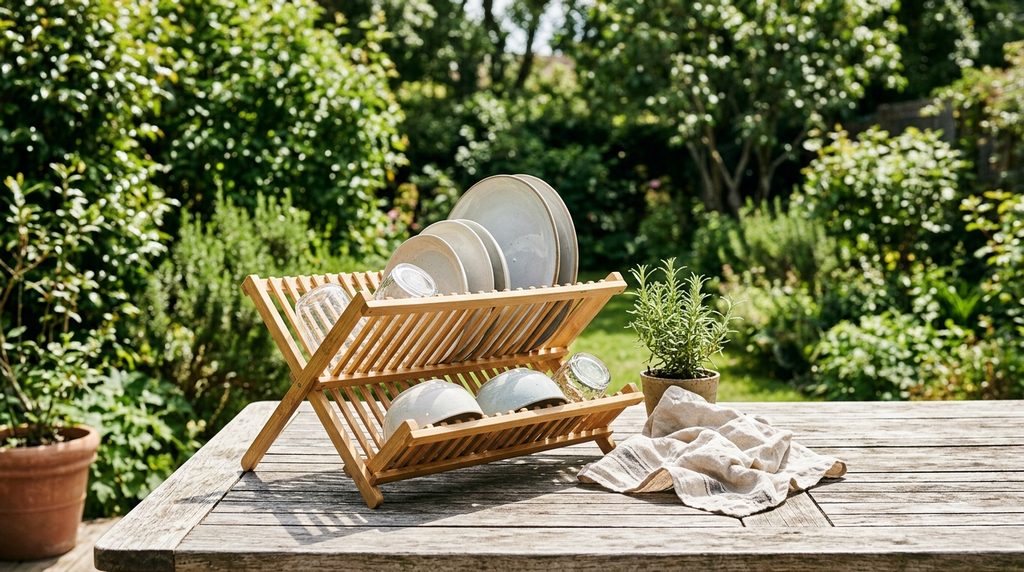
Before bringing the rack back into your kitchen, make sure it is completely dry. This simple habit can help keep your bamboo dish rack fresh and in good condition.
How to Clean Mold Off a Bamboo Dish Drying Rack
If you already have a bamboo dish drying rack and notice small spots of mold, you may be able to clean them if they are only on the surface.
It is best to deal with the problem as soon as you notice it. Bamboo is a porous material, so mold can be difficult to remove once it gets deep into the wood. If the mold covers a large area or keeps coming back, replacing the rack is a safer option.
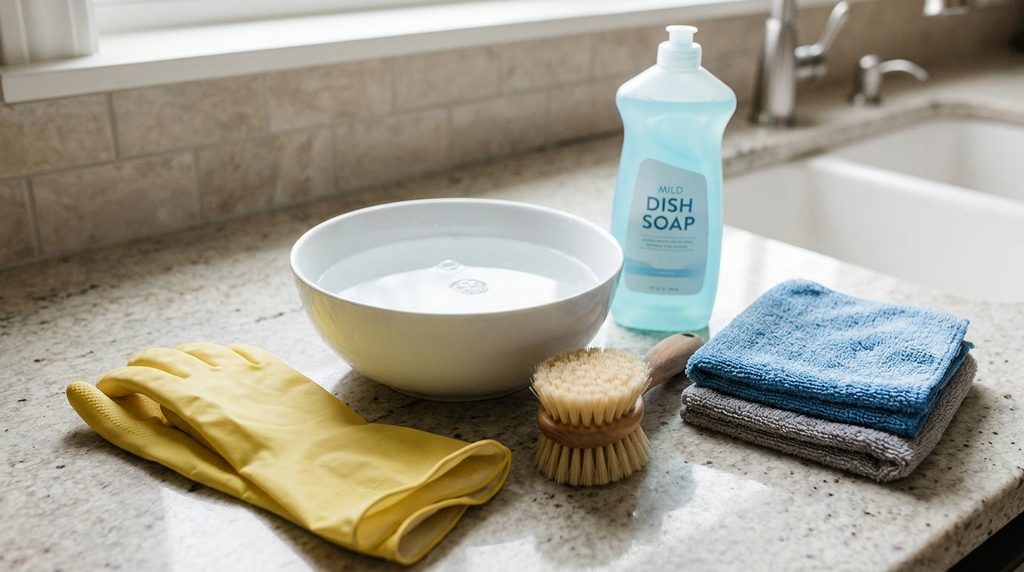
What You Will Need
Before you start cleaning, gather these simple household cleaning supplies:
- Mild dish soap
- Warm water
- A small, soft-bristled cleaning brush
- Clean microfiber cloths
- Protective gloves
Cleaning Instructions
Follow these simple steps to clean small areas of surface mold from your bamboo dish drying rack:
- Remove all the dishes from the rack and wash them separately with dish soap and clean water.
- Mix a few drops of mild dish soap with warm water in a small bowl.
- Dip a soft cleaning brush into the soapy water and gently clean the affected areas.
- Pay attention to the spaces between bamboo slats, joints, and corners where moisture can collect.
- Wipe away the loosened dirt and soap residue with a clean, damp microfiber cloth. Rinse the cloth often.
- Use a dry towel to remove as much moisture as possible.
- Place the rack in a well-ventilated area and allow it to dry completely before using it again.
Important Safety Tips: Wear protective gloves, goggles, and a properly fitted N95 mask when dealing with visible mold. Avoid dry brushing or scrubbing mold because this can spread mold particles into the air.
Never soak your bamboo dish rack in water or put it in the dishwasher. Too much water can damage the bamboo and make it harder to keep dry.
If mold covers a large area, has penetrated the bamboo, or keeps returning after cleaning, replacing the rack is a better option, especially because it is used near clean dishes and kitchen items.
What If Black Mold Keeps Coming Back?
If you keep finding black spots on your bamboo dish drying rack even after cleaning it, the mold may have spread deeper into the bamboo. In this case, simple cleaning may not be enough to solve the problem.
Check your dish rack for signs such as a strong musty smell, mold spots that keep returning, soft areas, cracks, or damaged bamboo. These signs may mean that the rack needs to be replaced.
If you cannot remove the mold completely or it continues to grow, it is better to replace the dish rack. After all, you don’t want to place clean dishes on a surface that may still have mold.
Important Tip: Never apply mineral oil, paint, or a protective coating over existing mold. Always make sure the bamboo is clean, mold-free, and completely dry before applying any suitable treatment.
How Often Should You Clean a Bamboo Dish Drying Rack?
You don’t need to spend hours cleaning your bamboo dish drying rack. A simple cleaning routine is enough to keep it in good condition and reduce the risk of mold. Here is an easy schedule you can follow:
| How Often | What to Do |
|---|---|
| After each use | Remove dry dishes and wipe away extra water. |
| Every evening | Dry the dish rack, drying mat, and countertop. |
| Once a week | Clean with mild dish soap or diluted white vinegar, if suitable for the rack’s finish. |
| Occasionally | Place the rack in a shaded, well-ventilated area to help it dry. |
| Every few months | Apply food-grade mineral oil to unfinished bamboo, if recommended by the manufacturer. |
Things You Should Never Do to a Bamboo Dish Drying Rack
Taking care of a bamboo dish rack is not difficult, but a few common mistakes can damage it or increase moisture buildup. Avoid these habits:
- Never leave the rack sitting in standing water.
- Never soak it in the kitchen sink.
- Never put it in the dishwasher.
- Never leave a wet dish drying mat underneath it overnight.
- Never apply oil to damp or moldy bamboo.
- Avoid harsh cleaning chemicals and rough scrubbing pads.
- Never mix bleach with vinegar or other cleaning products.
- Never fold or store the rack while it is still damp.
- Never leave wet dishes on the rack for longer than necessary.
Final Thoughts
I plan to keep my bamboo dish drying rack for a long time, so I want to make sure I take good care of it. These simple cleaning and maintenance tips are the habits I plan to follow from the beginning.
I believe preventing mold starts on the first day you bring your dish rack home. There is no need to wait until you notice black spots or unpleasant smells before taking action. Regular cleaning and proper drying can make a big difference.
Learning how to clean and prevent mold on a bamboo dish drying rack comes down to a few simple habits. Keep the rack clean, avoid standing water, take care of your dish drying mat, and allow enough airflow around the bamboo. Most importantly, make sure the rack dries completely between uses. These small steps can help your bamboo dish rack stay clean and last longer.